
I've had a lot of time to progress with guitar this summer and experiment with blues and flamenco. I prefer instrumental over lyrical songs which, I think, conveys more feeling and thought than words can. Each note can paint a narrative picture in the listener's mind--a great example of this is, The 1812 Overture by Pyotr Ilyich Tchaikovsky, which tells the story of Napoleon's invasion of Russia. While on the subject of classical, think about this: there was a specific time frame in our past which we as a species invented astounding music--well over 150 years ago. We certainly don't have that anymore and while music has evolved for better or for worse, classical should always remain as one of the pinnacles of mankind. These days' people overlook this music and don't pay attention to it. I'm disappointed in myself because I too, don't know a lot about each composer--but I know a little! What would Wolfgang Mozart or J.S. Bach think of electric guitar? I'm sure their heads would explode.
There is a piece I wrote last summer using sound on sound, it doesn't even have a name. Originally, I played it over waves or ambient nature. At the time, I thought it was an interesting concept, bonding music to another force which created interesting atmospherics. Percussion isn't necessary for the solo--the waves provided an ample rhythmic pattern. In fact, I don't think a simple beat could add any relevance; its structure is complete as is.
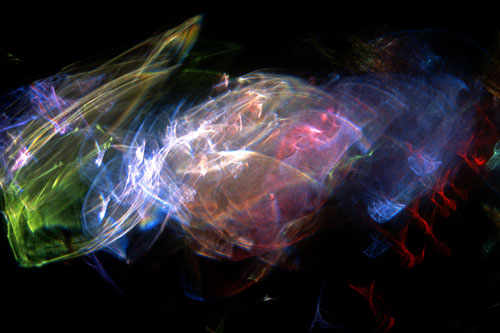 Usually, musicians write songs that coincide with their feelings or what they are/were going through with their lives. I look back on the time and feelings I was going through with this piece and realized how each phrase in this solo is unique in itself. Take a relationship for example, in a union; two people go through ups and downs. They experience passion, romance, fighting, jealousy, happiness, cheating, innocence, no responsibilities, etc. This piece, albeit short, is a narrative of a relationship amongst two people and what they go through. The original version is vastly different from its conception--further adding or revising each note, bend, vibrato, and pull-off. The ending note is one of uncertainty because there is always uncertainty in a relationship.
I'm not in any means an expert when it comes to this matter; however, the people that enter our lives add a layer to our personality. They're in our life for some reason and we learn from them. They're apart of us forever.
Enjoy
p.s.,
This a great story from the Washington Post (Pulitzer Prize winner) and an interesting social/behavior experiment.


1 comment:
music is something that will forever be progressing. while many people tend to say that the progression of of music has hit a wall, i say that composers have completely smashed that wall. it is true that pretty much everything thing has been achieved in the listenable frequency spectrum, especially now thanks to electronic synthesis, but the collection and ordering of those frequencies is limitless. Classical music as we know it today serves as a broad term to classify the true classical period and anything before 1900, as well as art music that is being performed at the university level and above in concert halls across the country. while there are still a handfull of composers left trying to replicate the classical music of the past, classical music as we know it has evolved naturally over time to include the social progression over the years. most people would say that this music is unlistenable to the untrained ear, such as the twelve tone music of the early 20th century, but there have been many composers who have taken the symphony orchestra and brought it to a place that no would could have imagined 100 years ago. Stravinsky, Tchaikovsky, Debussy, just to name a few took the orchestra to new heights, while Steve Reich, John Adams, and other minimalist composers writing at this very moment are breaking new ground by integrating the orchestra with electronics. People will always find a way to create music. i can't wait to hear what will be created 50 years from now.
i like your piece. you're definitely channeling some Dark Side of the Moon on that one. i hope all is well.
Post a Comment